Freestanding Soaker vs. Alcove vs. Walk-In Tubs: How Kingston's Aging-in-Place Trend Is Changing Bathroom Design
June 29, 2026
You are standing in the bathroom of a house you have lived in for decades, looking at the same tub you have always had, and for the first time you are thinking about the wall you have to climb over to get into it. Maybe a parent is moving in. Maybe your own knees have started filing complaints every morning. Maybe a recent slip turned a routine soak into something you now think twice about. Whatever brought you here, the question underneath it is simple: which tub actually fits the life you are living now, not the one you had when the house was built?
Here is the short version. A freestanding soaker rewards comfort and looks but asks the most of your body and your floor. An alcove tub is the practical workhorse most homes already have. A walk in tub trades floor space and fill time for a low threshold and a seat. After fitting these into hundreds of Kingston bathrooms, the right pick almost never comes down to the tub itself. It comes down to your doorway width, your floor framing, and how you plan to use the room ten years from now.
Sort These Three Things Before You Shop
Before any photo wins you over, settle these in order.
- Measure your doorway and the route to the bathroom. Many walk in units arrive as a single piece around 28 to 32 inches wide, and plenty of century home doorways are narrower than that.
- Decide who uses the room and how. A seat and a low step in matter far more for daily safety than soak depth does.
- Look under the floor. A heavy soaker over an old, unreinforced second story invites movement and cracked tile down the line.
WARNING: A full soaker can press 400 to 600 pounds onto a small footprint, and many walk in tubs and air jet units need a dedicated nearby circuit and a heater. Putting that load on old framing or running the heater on an overloaded circuit in a damp room is a real structural and shock hazard. Have the framing and wiring checked before you commit.
TIP:
Tape out the full tub footprint on your bathroom floor with painter's tape, set a kitchen chair inside the outline, and sit. Two minutes of that teaches you more about fit than any brochure.
Soaker, Alcove, and Walk In Tubs, Plainly
Freestanding Soaker
A deep, sculptural basin that stands on its own, with plumbing rising through the floor or a nearby wall. The draw is depth and warmth, often 22 to 25 inches of wall to sink into. That same wall height is the problem as mobility changes, and the open sides leave nowhere solid to mount a grab bar. It also carries the most weight. Best for design forward bathrooms and households with steady balance.
Alcove Tub
The familiar three wall, one finished side unit, usually 60 inches long. It is the least disruptive to fit, ties neatly into a shower combo, and its studs give you solid backing for grab bars later. The step over wall still runs 14 to 16 inches, which a tired knee feels at the end of a long day. Best for most homes and families.
Walk In Tub
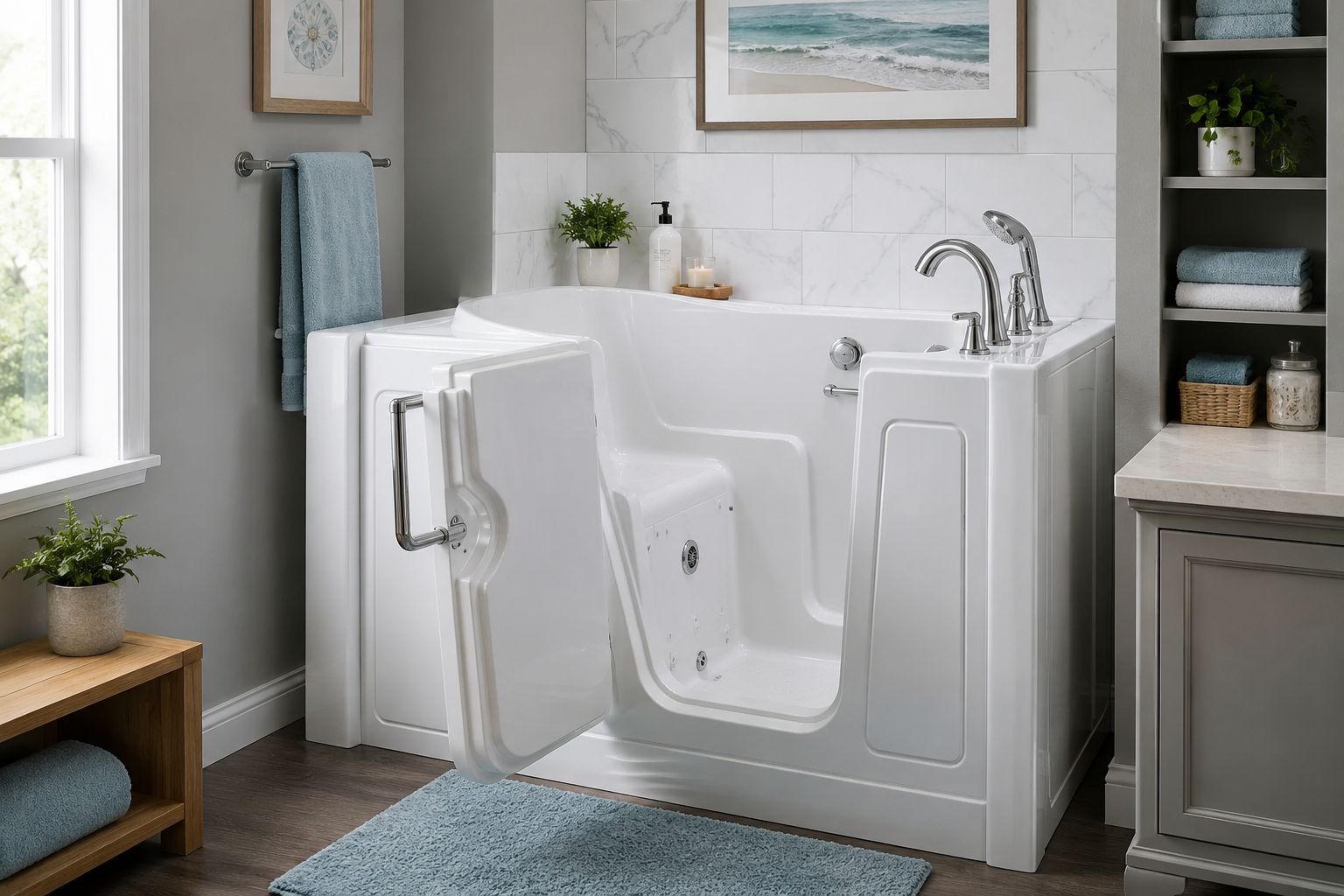
A door in the side wall, a low threshold often around 3 to 7 inches, a built in seat, and a watertight latch. It offers the safest entry of the three. The trade is patience: you sit inside while it fills and drains, often three to eight minutes each way, so hot water supply and seal upkeep matter. Best for aging in place and limited mobility.
Quick Comparison
| Factor | Freestanding Soaker | Alcove Tub | Walk In Tub |
|---|---|---|---|
| Step over height | 22 to 25 inches | 14 to 16 inches | 3 to 7 inches |
| Fits a narrow doorway | Hard | Easy | Often tight |
| Daily entry safety | Low | Medium | High |
| Floor load | Highest | Moderate | Moderate to high |
| Soak depth | Deepest | Moderate | Good, seated |
| Fill and drain wait | None | None | 3 to 8 minutes |
| Grab bar mounting | Difficult | Easy | Built in support |
How Aging in Place Is Shifting the Choice
More Kingston households are deciding to stay in the home they love rather than move, and that single decision rewrites the bathroom plan. The bathroom is the highest fall risk room in any house, so the conversation has moved away from the deepest soak and toward the safest entry. We now field far more requests to swap a tall alcove or soaker for a low threshold option, and walk in units that once read as clinical have become a mainstream renovation. The smart version of this trend is not ripping out a perfectly good tub at the first sign of stiff joints. It is choosing your next tub, whenever it comes, with the next decade in mind instead of just this year.
What Kingston Homes Throw at You
Kingston adds wrinkles a generic guide will never warn you about. Our water runs hard off the limestone bedrock, so mineral scale builds quickly on air jets and on the rubber door seal of a walk in tub, sometimes stiffening a gasket within a couple of years if it is never wiped down. The downtown stone and brick houses come with narrow doorways and compact bathrooms that a wide single piece unit simply will not pass through without trim work. Second story bathrooms in older homes often sit on joists framed for lighter loads, which is why a heavy soaker so often needs reinforcement here. And our long, cold winters drive real demand for deep warm soaks, yet those same long pipe runs and modest hot water tanks slow a walk in tub's fill, so we size the supply side carefully before install day.
Matching the Tub to Your Household, and the Mistakes We See
On service calls the pattern is consistent. The most common mistake is buying for the showroom photo instead of the doorway, then discovering on install day that the unit will not clear the hall. The fix is measuring the full path first, every time. The second is assuming an old second floor will carry a soaker without a thought to the framing underneath, which ends in flexing floors and cracked grout. We check joist size and spacing before anything is ordered. The third is treating a walk in tub as install and forget, when its door seal and jets need the most routine attention of any tub we fit, especially against our hard water.
Keeping It Working
Monthly, wipe the door seal on a walk in tub and run a jet flush to clear early scale. Quarterly, check caulk lines and look for any weeping at the threshold or drain. Annually, have the seal, the heater, and the supply connections inspected so a slow leak is caught while it is still cheap to handle. Over the long term, plan for a periodic descale on any jetted unit, since our limestone water works against jets and gaskets far faster than the national average.
Frequently Asked Questions
How long does a walk in tub take to install in an older Kingston home?
Most installs run one to three days. Older homes add time when we reinforce floor joists, widen a doorway, or rerun supply lines. We confirm the path and the framing before ordering, so install day holds no surprises.
Are walk in tubs safe for someone who cannot sit for long?
The door stays shut while the tub fills and drains, so you sit through both, often three to eight minutes each way. For anyone who chills quickly or cannot wait seated, a low threshold shower or a seated alcove suits better.
Does Kingston hard water damage soaker jets or walk in tub seals?
Yes. Our limestone heavy water leaves mineral scale that clogs air jets and stiffens door gaskets within a couple of years. Flushing the jets monthly and wiping the seal after each use keeps both working far longer.
Can a freestanding soaker go on a second floor bathroom?
Often, but not always. Full of water and a bather, a soaker can press 400 to 600 pounds onto a small footprint. We check joist size and spacing first, then reinforce the framing wherever the original structure falls short.
Which tub adds the most resale appeal in Kingston?
It depends on the buyer. A freestanding soaker photographs beautifully for design minded shoppers, while a low threshold or walk in option speaks to the many households here planning to age in place. Match the tub to your likely buyer.
Experienced Local Plumbers Guiding Your Aging in Place
The right tub is the one that matches your doorway, your floor, and the way you will move through the room a decade from now, not the one that looks best under showroom lights. That math matters more in Kingston than most places, because our older homes, tight
bathrooms, and hard limestone water turn small planning misses into costly ones. With 10
years of experience, we at Ogden Plumbing
have fitted soakers, alcove tubs, and walk in units into homes across Kingston, Ontario, from century houses to newer builds. If you are weighing a tub change, reach out and we will measure your space, check your framing and water lines, and tell you honestly which option earns its place.